
Key Takeaways
In this article, you’ll learn how acupuncture can help your digestion and complement treatments for various digestive disorders:
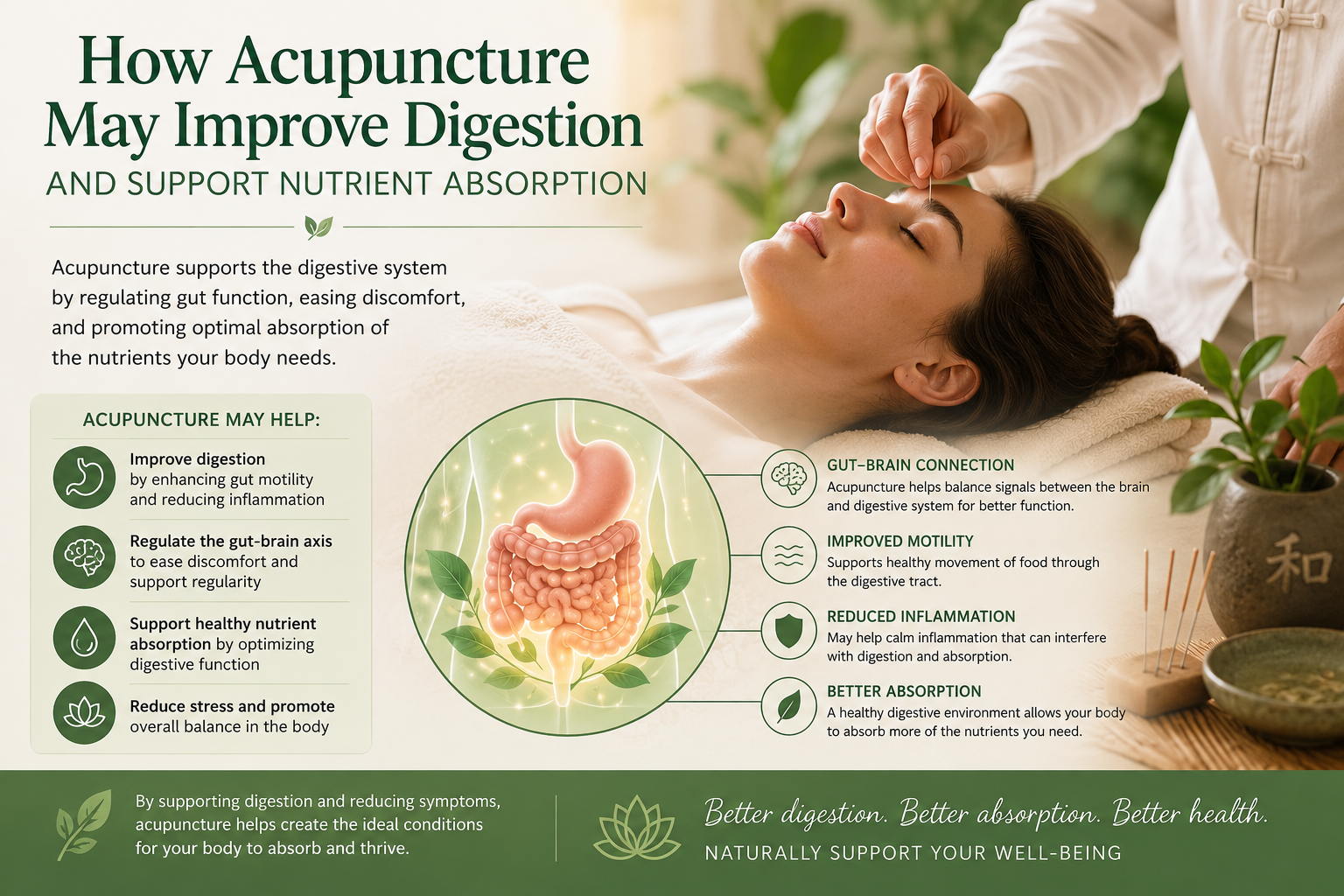
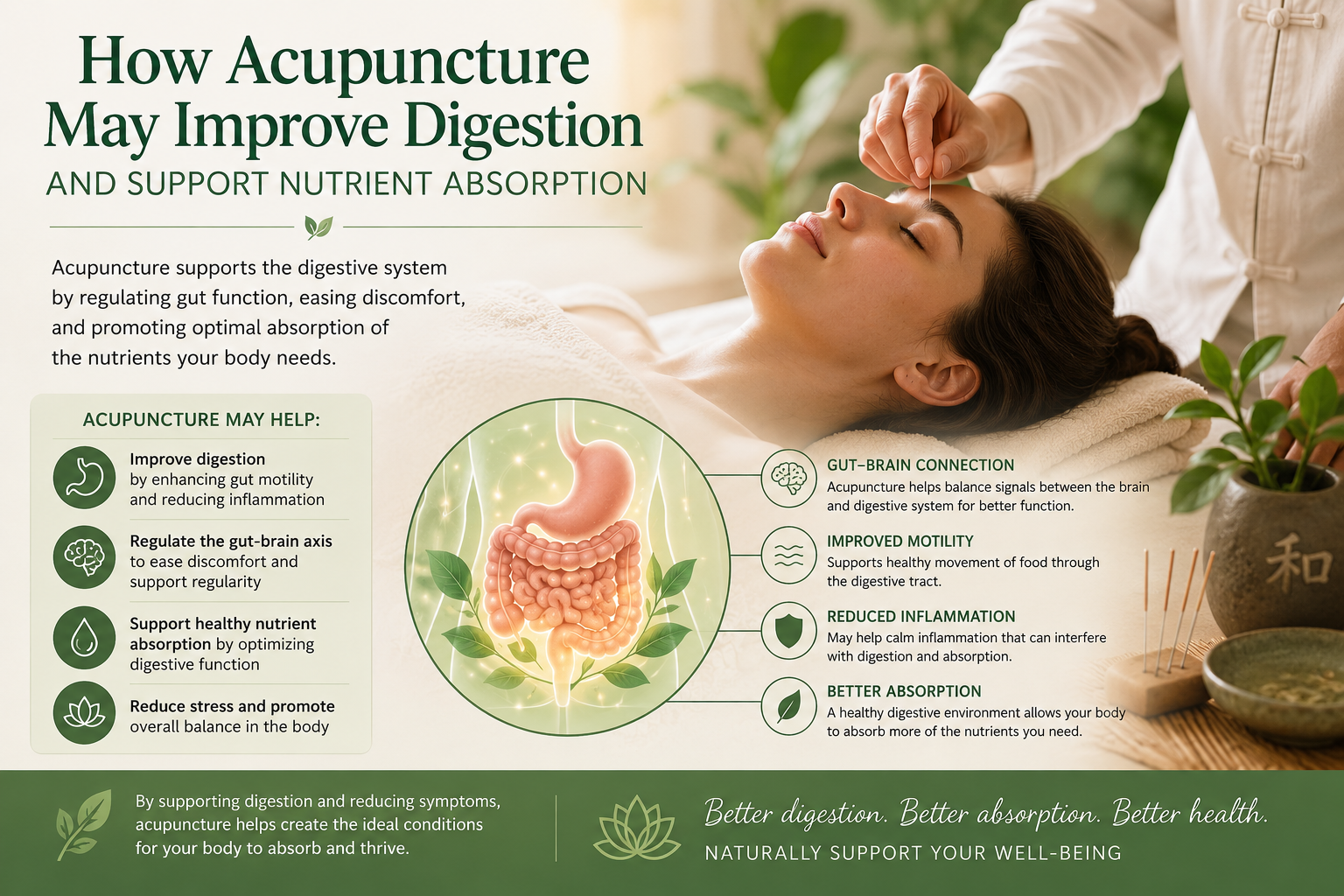
- Acupuncture enhances digestive function by improving blood circulation and communication within the digestive system, promoting better nutrient absorption and overall gut health.
- Acupuncture aids digestion indirectly by alleviating the symptoms of digestive disorders, which allows improved nutrient absorption due to the normalized environment.
- Scientific studies have found that acupuncture is an effective complementary treatment for digestive disorders, enhancing conventional therapies and supporting healthy digestion.
Introduction
Chinese medicine emphasizes the importance of a healthy digestive system to form the solid foundation for our health. In my acupuncture practice, I prioritize educating my clients about the importance of good nutrition. I find that many people need to take specific nutritional supplements in addition to eating healthy meals to achieve their best health. After all, a person’s health depends not so much on what they swallow, but rather on what their body can absorb.
And that’s where acupuncture comes in. Traditional Chinese Medicine has been used for thousands of years to support the health of the digestive system as well as to address any problems experienced by patients. These days, acupuncture is a common complementary therapy for digestive complaints such as bloating, indigestion, constipation, abdominal pain, and altered bowel habits.
Current research suggests that acupuncture can help people suffering from disorders of gut motility and/or brain-gut interaction, and it has been found to be particularly effective in cases of functional dyspepsia, irritable bowel syndrome, constipation, and possibly gastroparesis (Li et al., 2026; Tan et al., 2025; Wang et al., 2024; Xv et al., 2025). Research indicates that acupuncture helps more in terms of symptom relief than directly modifying nutrient absorption, but by improving symptoms (for example, early fullness, nausea, slowed transit, abdominal pain, or irregular bowel movements), acupuncture indirectly supports the digestive processes. In other words, acupuncture may improve conditions that interfere with digestion, which can help normalize the environment in which vitamins and minerals are absorbed (Montoro-Huguet et al., 2021).
How Digestion and Absorption Are Linked
Normal absorption of vitamins depends on a coordinated digestive system. Food must be ground up in the mouth and stomach, mixed with acid and enzymes, and passed into the small intestine, where the pancreatic secretions, bile, etc., allow a healthy intestinal lining to take in the nutrients. Reviews of malabsorption emphasize that impaired gastric emptying, altered intestinal transit, inflammation, mucosal injury, pancreatic insufficiency, and disrupted bile delivery can all interfere with nutrient uptake (Montoro-Huguet et al., 2021). So, as I said before, it’s not just what you eat, but what you absorb that matters, and that depends on the state of your digestive system—things like motility, secretion, mucosal integrity, and the gut’s interaction with the nervous system all play a part. If any of them are disrupted, even a nutrient-dense diet may not give you everything you need.
How Acupuncture Supports Digestion
Acupuncture can help. Several reviews suggest that acupuncture may influence digestive processes through the autonomic nervous system and the gut-brain axis. Acupuncture can modulate vagal and sympathetic activity, alter gastrointestinal hormone signaling, affect visceral sensitivity, and influence central brain regions involved in pain, emotion, and digestive regulation (Kim et al., 2023). A 2024 study that included functional MRI findings found that acupuncture was associated with improvement in abdominal pain, distension, stool characteristics, and psychological symptoms, while also altering activity throughout the brain (Wang et al., 2024). This suggests that acupuncture works partly by regulating brain-gut communication rather than acting only locally at the insertion site. Other studies have found possible effects on gastric accommodation, gastrointestinal motility, low-grade inflammation, mucosal signaling, and microbiota-related pathways, although these mechanisms still require stronger human evidence (Kim et al., 2023; NCCIH, 2026).
Acupuncture Benefits for Specific Conditions
So far, we’ve talked about acupuncture’s ability to help patients with digestive problems in a general sense. Next, let’s look at some specific conditions and see what the research shows.
Functional Dyspepsia
A recent (2026) meta-analysis of 23 randomized trials concluded that acupuncture probably improves dyspepsia symptoms and quality of life compared with sham acupuncture, no treatment, usual care, and prokinetic medications (Li et al., 2026). This has implications for nutritional absorption because functional dyspepsia is often associated with reduced appetite, limited intake, and impairment of the early phases of digestion. If you don’t feel like eating, your nutrition suffers. So when patients feel better and can tolerate meals more comfortably, nutritional intake may improve, even if direct absorption has not been specifically enhanced. In addition, it should be noted that these benefits from acupuncture accrue without a corresponding increase in the likelihood of adverse effects. This is, in general, one of the great strengths of acupuncture: properly done, there is minimal risk and virtually no side effects, which stands in stark contrast to most surgical or pharmacological treatments.
Irritable Bowel Syndrome
Evidence is also growing for the benefits of acupuncture for irritable bowel syndrome (IBS). A 2025 trial of patients suffering from diarrhea-predominant IBS found that acupuncture outperformed sham acupuncture. Patients experienced reduced abdominal pain and fewer days with diarrhea over the six-week treatment period, and these benefits continued even after the treatment period was over. In fact, the relative improvement over sham acupuncture continued throughout all but one week of the twelve-week follow-up period (Yang et al., 2025). Other studies of functional gastrointestinal disorders likewise found better overall symptom response with acupuncture compared to sham procedures, no specific treatment, or pharmacotherapy, although the certainty of evidence ranged from low to moderate (Wan et al., 2025; Wang et al., 2021). The benefit from acupuncture was also found to be related to the frequency and duration of treatment. Once again, these benefits were not accompanied by any increase in adverse events.
As before, by relieving the symptoms and discomfort of IBS, acupuncture allows a more normal intake of food. Further, by reducing diarrhea symptoms, it also improves nutrient retention. If acupuncture reduces symptom burden and improves stool consistency or bowel regularity, it lowers the barriers to maintaining nutritional status.
Constipation
For constipation and other motility-related disorders, systematic reviews suggest that, similar to IBS, acupuncture can improve bowel frequency, stool form, and some quality-of-life outcomes (Song et al., 2024; Wang et al., 2020). A 2025 network meta-analysis of nine different non-pharmacological treatments for functional constipation found that acupuncture had the highest overall clinical efficacy of all of them (Tan et al., 2025). In postsurgical or postoperative gastroparesis syndromes, recent studies have also reported improvements in symptom response and markers of gastric motility (Fan et al., 2023; Xv et al., 2025). Taken together, these findings support acupuncture as a symptom-focused adjunct for digestive disorders that involve constipation.
Conclusion
Acupuncture has been used to support digestion and ease digestive dysfunction for thousands of years. Modern science is now shedding light on how it works for many of these conditions. Overall, research supports acupuncture as an effective complementary therapy that can improve symptoms of multiple digestive conditions, especially functional dyspepsia, irritable bowel syndrome, diarrhea, constipation, and some forms of gastrointestinal dysmotility. Proposed mechanisms include modulation of the autonomic nervous system, improved gut-brain communication, altered visceral sensitivity, changes in motility, and possible anti-inflammatory effects. These benefits create better conditions for digestion, and because of this also lead indirectly to improved nutrient absorption.
So, while acupuncture might not work as a standalone treatment for acute conditions like ulcerative colitis, it offers a low-risk, high-reward option for managing mild to moderate digestive symptoms and can support overall improved health. As an adjunct to conventional Western medical treatments, this minimally invasive and extremely safe modality offers the potential for enhanced benefits with virtually no added risk.
About the Author
 Connie Hsiang Yun Lee Nelson is a licensed acupuncturist based in Lynnwood, Washington. She runs her own Primal Tao Movement acupuncture clinic serving Lynnwood and the nearby communities of Bothell, Everett, Marysville, Edmonds, Shoreline, and Seattle. She also treats patients at the Dayhoff Orthopedic Acupuncture clinic in Mount Vernon, north of Seattle.
She specializes in orthopedic acupuncture, which she uses to treat all kinds of musculoskeletal conditions, pre-habbing and rehabilitating her clients to help them achieve their fullest potential for mobility and a pain-free life. She incorporates cupping, acupuncture, dry needling, and movement coaching into comprehensive individualized care plans. She is also keen to help her clients with nutritional advice and Chinese herbal medicine.
Connie holds a Bachelor of Science in nursing, a master’s degree in acupuncture with a Chinese herbal medicine certificate, and multiple teaching certificates in various health and fitness-related modalities. She is currently pursuing a Doctorate in Acupuncture from the Pacific College of Health and Science.
References
Fan, Z., Qiu, Y., Qi, X., Xu, J., Wan, Y., Hao, Y., Niu, W., & Huang, J. (2023). Invasive acupuncture for gastroparesis after thoracic or abdominal surgery: A systematic review and meta-analysis. BMJ Open, 13(6), Article e068559. https://doi.org/10.1136/bmjopen-2022-068559 (opens in a new tab)
Kim, M. J., Lee, S., & Kim, S. N. (2023). Effects of acupuncture on gastrointestinal diseases and its underlying mechanism: A literature review of animal studies. Frontiers in Medicine, 10, Article 1167356. https://doi.org/10.3389/fmed.2023.1167356 (opens in a new tab)
Li, X.-X., Hu, Z.-Y., Li, Z.-C., Tang, J., Liu, Y.-Y., Zeng, D.-H., Zhou, Q.-Q., Ma, W.-B., Lan, L., & Wang, L. (2026). Efficacy and safety of acupuncture for functional dyspepsia: An updated meta-analysis of randomized controlled trials. Frontiers in Medicine, 13, Article 1718632. https://doi.org/10.3389/fmed.2026.1718632 (opens in a new tab)
Montoro-Huguet, M. A., Belloc, B., & Domínguez-Cajal, M. (2021). Small and large intestine (I): Malabsorption of nutrients. Nutrients, 13(4), Article 1254. https://doi.org/10.3390/nu13041254 (opens in a new tab)
National Center for Complementary and Integrative Health. (2026). Acupuncture: Effectiveness and safety. National Institutes of Health. https://www.nccih.nih.gov/health/acupuncture-effectiveness-and-safety (opens in a new tab)
Song, S., Hao, W., & Fu, H. (2024). Efficacy of acupuncture for functional constipation in elderly: A systematic review and meta-analysis. Frontiers in Medicine, 11, Article 1473847. https://doi.org/10.3389/fmed.2024.1473847 (opens in a new tab)
Tan, S., Peng, C., Lin, X., Peng, C., Yang, Y., Liu, S., Huang, L., Bian, Y., Li, Y., & Xu, C. (2025). Clinical efficacy of non-pharmacological treatment of functional constipation: A systematic review and network meta-analysis. Frontiers in Cellular and Infection Microbiology, 15, Article 1565801. https://doi.org/10.3389/fcimb.2025.1565801 (opens in a new tab)
Wan, R., Zeng, X., Zhang, Y., Zhang, Y., Wang, H., Sun, L., Chen, S., Luo, F., Hou, Y., Zheng, Q., & Li, Y. (2025). Potential benefit with acupuncture in functional gastrointestinal disorders: A systematic review and meta-analysis. Complementary Therapies in Medicine, 93, Article 103230. https://doi.org/10.1016/j.ctim.2025.103230 (opens in a new tab)
Wang, L., Luo, X., Qing, X., Fang, S., Jiang, T., Wang, Q., Zhong, Z., Yang, Y., Yang, J., Song, G., Su, X., & Wei, W. (2024). Symptom effects and central mechanism of acupuncture in patients with functional gastrointestinal disorders: A systematic review based on fMRI studies. BMC Gastroenterology, 24(1), Article 47. https://doi.org/10.1186/s12876-024-03124-y (opens in a new tab)
Wang, L., Xu, M., Zheng, Q., Zhang, W., & Li, Y. (2020). The effectiveness of acupuncture in management of functional constipation: A systematic review and meta-analysis. Evidence-Based Complementary and Alternative Medicine, 2020, Article 6137450. https://doi.org/10.1155/2020/6137450 (opens in a new tab)
Wang, X.-Y., Wang, H., Guan, Y.-Y., Cai, R.-L., & Shen, G.-M. (2021). Acupuncture for functional gastrointestinal disorders: A systematic review and meta-analysis. Journal of Gastroenterology and Hepatology, 36, 3015–3026. https://doi.org/10.1111/jgh.15645 (opens in a new tab)
Xv, Y., Feng, Y., & Lin, J. (2025). Efficacy and safety of acupuncture for postoperative gastroparesis syndrome: A systematic review and meta-analysis. Frontiers in Medicine, 11, Article 1494693. https://doi.org/10.3389/fmed.2024.1494693 (opens in a new tab)
Yang, J.-W., Qi, L.-Y., Yan, S.-Y., She, Y.-F., Li, Y., Chi, L.-L., Hu, H., Wang, L.-Q., Ji, C.-C., Wu, B.-Q., Fu, Z.-T., Li, S.-J., Yang, N.-N., Wang, Y., & Liu, C.-Z. (2025). Efficacy of ACupuncTure in Irritable bOwel syNdrome (ACTION): A multicenter randomized controlled trial. Gastroenterology, 169(5), 958–969. https://doi.org/10.1053/j.gastro.2025.05.016 (opens in a new tab)
These statements have not been evaluated by the FDA. These products are not intended to diagnose, treat, cure, or prevent any disease. The views and nutritional advice expressed are not intended for the purpose of providing medical advice. Please consult with your healthcare practitioner if you are taking any medications or have any medical conditions. Individual results may vary.